Corporate Culture, Part 3: Top Performers and Toxic Employees
In corporate culture, part 1: How Do You Define Your Work Culture?, we discussed how elite companies define their ideal corporate culture.
In corporate culture, part 2: Creating Lasting Change, we discussed the methodology for creating effective and lasting change.
In part 3, we discuss different employee types and what specific levers are most effective in transforming culture.
------------
If the goal of corporate culture transformation is to increase the aggregate performance of employees and teams across the firm, you first need to break down core components of culture into measurable, actionable areas.
"Corporate culture measures aggregate employee attitudes, which consist of role satisfaction and commitment to the organization".
The two core components of culture, role satisfaction and commitment to the organization, allow us to then apply specific levers to help drive cultural transformation.
1. Components of Culture: Role Satisfaction and Commitment to the Organization
Corporate culture is broken down into two core component areas, which allow measurable, specific action and remediation plans.
Role Satisfaction: “Is this the right position for me? How happy am I at my day to day job?”
Commitment to the Organization: “Do I believe in my company? Am I truly valued by my employer?”
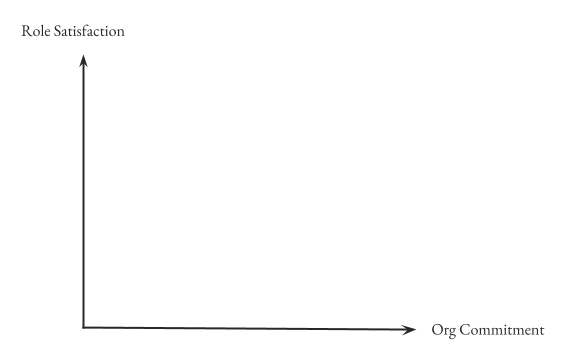
These are the baseline components of an employee’s experience and resulting attitude. They are necessary for our framework and allow us to understand what “levers” to pull.
2. Employee Types: Top Performers, High-Performing Non-Believers, Stuck Believers, and Low-Performers
Once we’ve established our baseline components of culture, we can then move on to categorizing employee performance types.
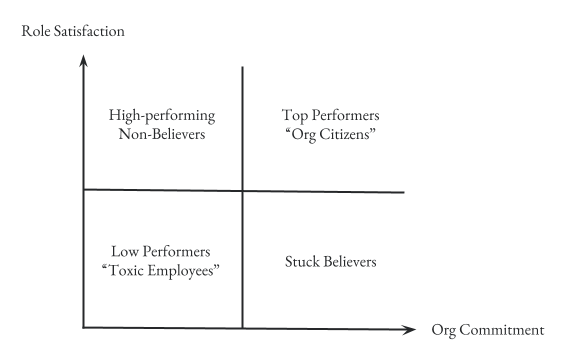
Top Performers: Also known as “Org Citizens,” Top Performers are dependable, highly productive employees. They believe in their company, their leadership, and love their jobs. You can count on them to finish a task to completion, and they are more likely to create innovative products and internal ventures.
High-Performing Non-Believers: These employees like their team, manager, and day-to-day position. They like the functions of their role and feel well compensated. There’s just one problem: they don’t believe in their company. Whether it’s because of a lack of faith in leadership or the company’s trajectory, they don’t feel a long-term commitment to the organization. These employees are likely to leave the company for a similar position at a rival.
Stuck Believers: These employees love their company mission and believe in their leadership. Most importantly, they believe in the long-term success of their companies. The problem is that they aren’t satisfied in their day-to-day roles. They are frequently serving a role that is not the right fit, they feel under-compensated, or they aren’t happy with their manager interactions. These high-value employees are likely to find a new job function at a different company.
Low Performers: While we dislike using the term “toxic,” it’s especially important to acknowledge when an employee actively creates negative value. This can happen when an employee doesn’t like their role, company, and overall feels disaffected. These employees can actively destroy value, as they counter-intuitively languish in their positions for far longer than expected. They bring down morale, become a distraction, and generally decrease firm productivity.
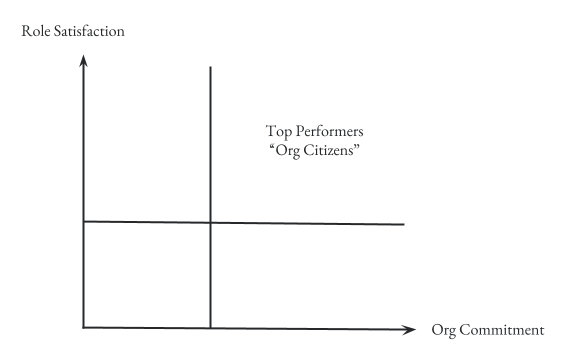
The goal of culture initiatives should be to shift the overall composition of the workforce into a higher percentage of top performers, while simultaneously decreasing the percentage from the other three categories.
3. Levers: How to create effective change
Now that we’ve established our components of culture and our employee performance types, we look to a simplified framework for creating lasting change. As outlined in our last blog post 'Creating Lasting Change', we use primary and secondary research to find out which core culture themes need development. After that research is done, we then categorize our core themes into one of our two core components.
The next step in our framework is to then understand the primary levers for role satisfaction and organizational commitment.
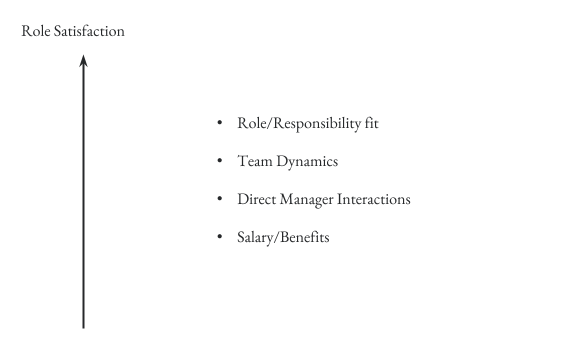
Role Satisfaction: As we discussed earlier, role satisfaction deals with how an employee feels about their job function, responsibilities, and manager interactions. Our levers tend to be actions which directly improve role satisfaction.
Examples include: Internal rotation programs, shadowing / mentorship, manager training and compensation improvements.
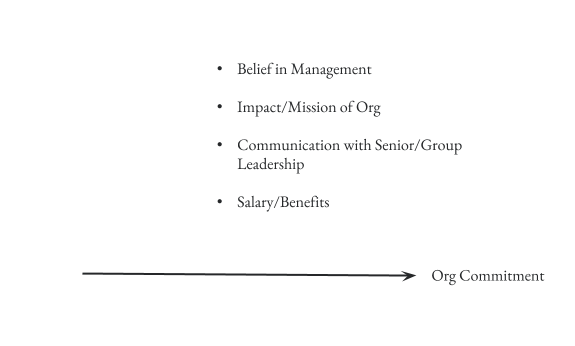
Organizational Commitment: Again, as we previously discussed, organizational commitment is related to a belief in management and the direction of the company. Actions that help foster organizational commitment generally center around communication, and include employee all-hands, leadership Q&As, and employee feedback programs.
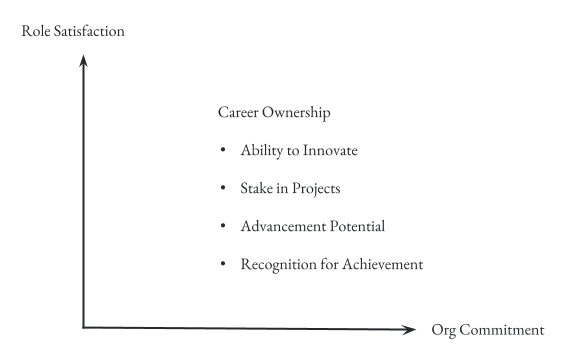
Both: Certain initiatives can have a positive effect on both role satisfaction and organizational commitment. These programs typically are focused on career ownership and development. They give employees recognition for innovation and firmwide contribution.